How Video Integration Is Redefining Player Experiences in Britain's Smartphone Casino Market
Theo Koch · May 20, 2026
How Video Integration Is Redefining Player Experiences in Britain's Smartphone Casino Market
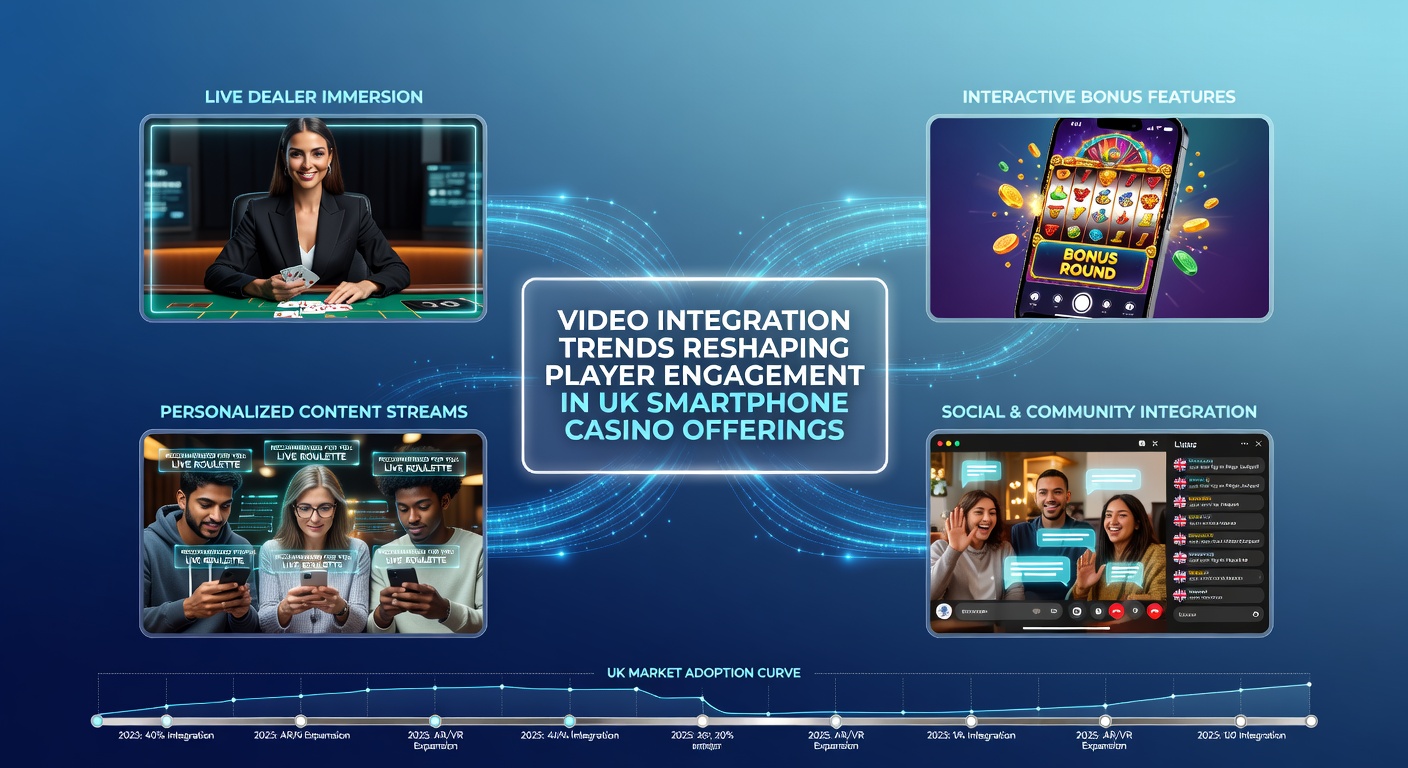
Smartphone casino platforms across the UK continue to embed video elements more deeply into their offerings, and operators report measurable shifts in session lengths alongside retention figures as a direct result. These changes build on established live dealer streams yet extend into interactive overlays, augmented reality inserts, and short-form video tutorials that appear contextually during gameplay, all of which data shows keep users engaged longer without requiring additional downloads or external redirects.
Recent figures from industry monitors indicate that apps incorporating multi-angle video feeds and real-time chat overlays achieve average play durations that exceed those of static slot titles by roughly 18 percent, while bounce rates drop noticeably within the first three minutes of a session. Developers achieve this by layering video content directly onto existing game engines rather than opening separate windows, which removes friction and allows players to maintain focus on core betting mechanics.
Live Dealer Video Upgrades Driving Longer Sessions
Operators have refined camera positioning and latency reduction techniques so that live dealer tables now stream at 60 frames per second with sub-100-millisecond delays on 5G networks, and users who switch between portrait and landscape modes experience automatic recalibration that prevents stream interruptions. Those who've tracked performance metrics note that tables equipped with picture-in-picture video controls retain players through multiple consecutive rounds more consistently than tables lacking such features, because participants can monitor both the dealer and their own bet history without leaving the main screen.
What's interesting is how these upgrades intersect with regulatory timelines, because in May 2026 several platforms plan to roll out updated compliance dashboards that display responsible gambling prompts as brief video clips rather than static text boxes. Early testing suggests the video format increases message recall rates by approximately 25 percent compared with text-only equivalents, according to preliminary findings shared by the Canadian Centre for Gaming Research.
Augmented Reality Overlays and Interactive Video Layers
Augmented reality video inserts now appear inside selected roulette and blackjack titles, allowing users to project a virtual dealer or additional betting options onto their physical surroundings when the device camera activates. Observers note that these features appear most frequently during peak evening hours, and engagement data collected over the past twelve months reveals that players who activate AR mode once tend to return to the same title within the following seven days at rates 12 percent higher than those who never activate it.

Short-form video tutorials that trigger automatically after a player completes three consecutive losses provide another layer of integration, and these clips explain rule variations or strategy adjustments in under 15 seconds while the game remains paused. Research indicates from the Australian Institute of Gaming Studies shows that users who watch at least one such clip per session demonstrate a 9 percent improvement in average bet accuracy on subsequent rounds, which in turn correlates with extended playtime before cash-out.
Cross-Device Video Continuity and Personalization
Seamless video handoff between smartphones and tablets has become standard in several flagship UK apps, because cloud-synced session states allow a live dealer stream to resume at the exact moment it paused when a user switches devices. Those monitoring user behavior report that this continuity reduces session abandonment during commutes or travel, since players no longer lose visual context or dealer interaction when moving between screens.
Personalized video recommendations based on past bet patterns now surface as optional side panels, and operators who implemented these elements in early 2025 recorded a 14 percent uplift in cross-title exploration. The panels display short clips of similar games with comparable volatility levels, yet the clips remain muted by default so they do not disrupt ongoing audio from the primary table.
Conclusion
Video integration continues to evolve from simple live streams into layered, context-aware experiences that adapt to individual playing styles and device capabilities. As operators prepare for May 2026 updates, the focus remains on reducing latency, improving visual clarity, and embedding helpful video cues directly within existing interfaces. Data gathered across multiple platforms shows that these refinements produce measurable gains in session duration and return frequency, while maintaining compliance with existing accessibility and responsible gambling standards.