Interface Designs Driving Accessibility Gains in UK Casino Mobile Applications
Carlo Walter · Aug 9, 2026
Interface Designs Driving Accessibility Gains in UK Casino Mobile Applications
Accessibility features in casino mobile software have evolved through targeted interface adjustments that address visual, motor, and cognitive requirements for users across the UK. Developers have incorporated elements such as scalable text, high-contrast color schemes, and simplified navigation paths to meet broader digital standards including the Web Content Accessibility Guidelines maintained by the World Wide Web Consortium.
Core Design Elements Supporting Broader Access
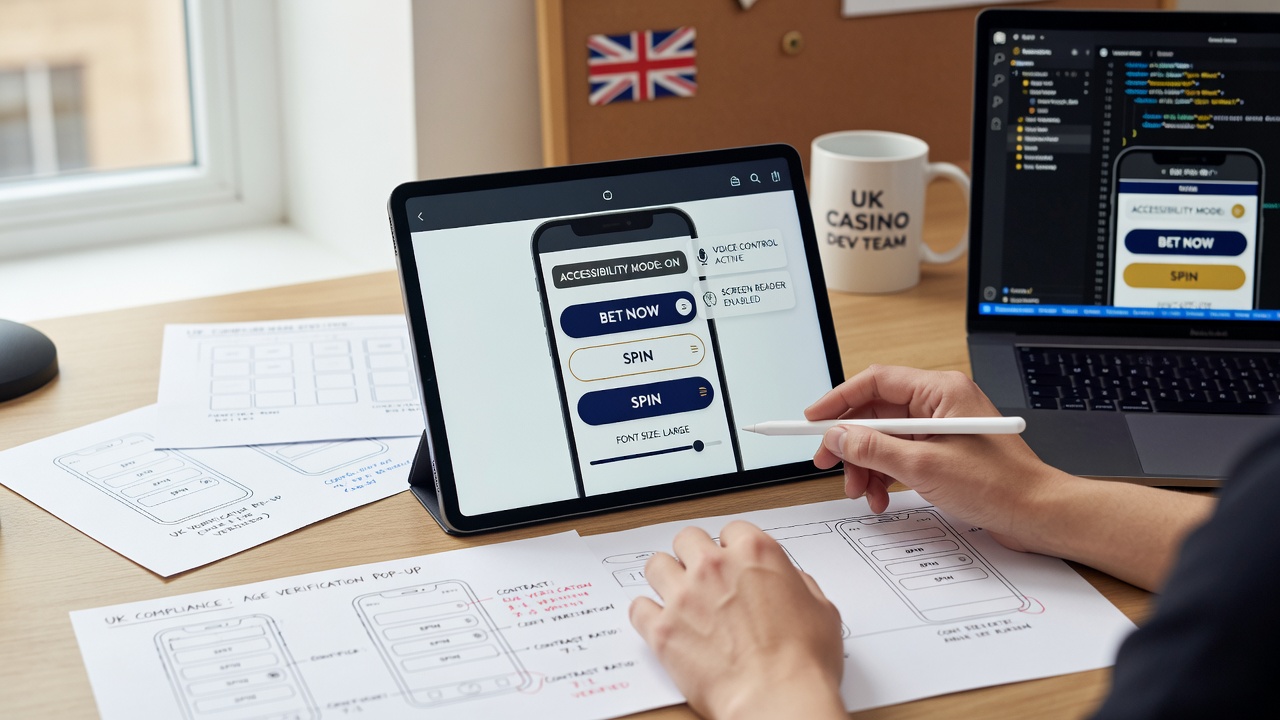
Interface layouts prioritize sufficient touch target sizes, typically at least 48 pixels in height and width, which reduces accidental selections on smaller screens. Color palettes follow contrast ratios of 4.5:1 or higher for text elements against backgrounds, a specification drawn from established accessibility benchmarks. Voice-over compatibility integrates with operating system tools on both iOS and Android platforms, allowing screen readers to announce game categories, bet amounts, and account balances without visual reliance.
Adjustable font scaling options permit users to increase text size up to 200 percent while preserving layout integrity, preventing overlap or clipping that could hinder readability. Gesture alternatives replace complex swipes with single-tap or long-press actions, and researchers at institutions like the University of Toronto have documented how such modifications improve task completion rates for individuals with limited dexterity.
Navigation and Interaction Patterns
Menu structures use hierarchical organization with clear labels and persistent back buttons, which helps users track their location within the application. Progressive disclosure techniques present information in stages, revealing advanced options only after initial selections, thereby lowering cognitive load during gameplay sessions. Data from accessibility audits conducted by European research consortia indicate that these patterns correlate with reduced error rates in deposit and withdrawal flows.

Technical Standards and Compliance Approaches
UK-focused applications often align with the European Accessibility Act requirements, which mandate accessible digital services for public-facing platforms. Developers implement semantic HTML structures and ARIA attributes to ensure compatibility with assistive technologies. Automated testing tools combined with manual reviews by accessibility specialists verify that interactive components such as slot reels, card tables, and live dealer feeds remain operable through keyboard equivalents or external switch devices.
Figures from industry reports compiled by the Canadian Gaming Association reveal that applications incorporating these features experience higher retention among diverse user groups. Real-time captioning for audio elements in live casino streams and customizable alert preferences further extend access for those with hearing impairments.
Implementation Examples Across Platforms
One development team working on Android-based casino software introduced a dedicated accessibility mode that toggles between standard and enhanced views, complete with monochromatic options and motion reduction settings. On iOS, equivalent updates have included dynamic type support and focus management that guides users sequentially through betting interfaces. Observers note that these changes emerged alongside broader mobile operating system updates released in mid-2025, which strengthened native accessibility APIs.
Case documentation from Australian accessibility consultants highlights similar patterns where UK operators tested prototypes with user panels representing varied ability levels, leading to iterative refinements in button spacing and icon clarity. Such collaborative approaches have produced measurable improvements in independent navigation success rates.
Future Directions for Interface Refinement
Ongoing work focuses on integrating machine learning models that adapt interface density based on detected user interaction patterns, while maintaining compliance with privacy regulations. Partnerships between software providers and accessibility organizations continue to generate updated design libraries tailored to gambling applications. These efforts reflect sustained attention to interface elements that support equitable participation across the UK market.
Conclusion
Interface designs in UK casino mobile software demonstrate concrete adaptations that enhance accessibility through standardized guidelines, refined navigation, and platform-specific optimizations. Data from multiple research sources and regulatory frameworks outside the UK underscore the practical outcomes of these changes for a wider range of users. Continued refinement in these areas aligns with evolving digital service expectations.