Platform Tailored Enhancements Supporting Stable Live Dealer Streams on iOS and Android Casino Apps for UK Users
Mia Lange · Aug 12, 2026
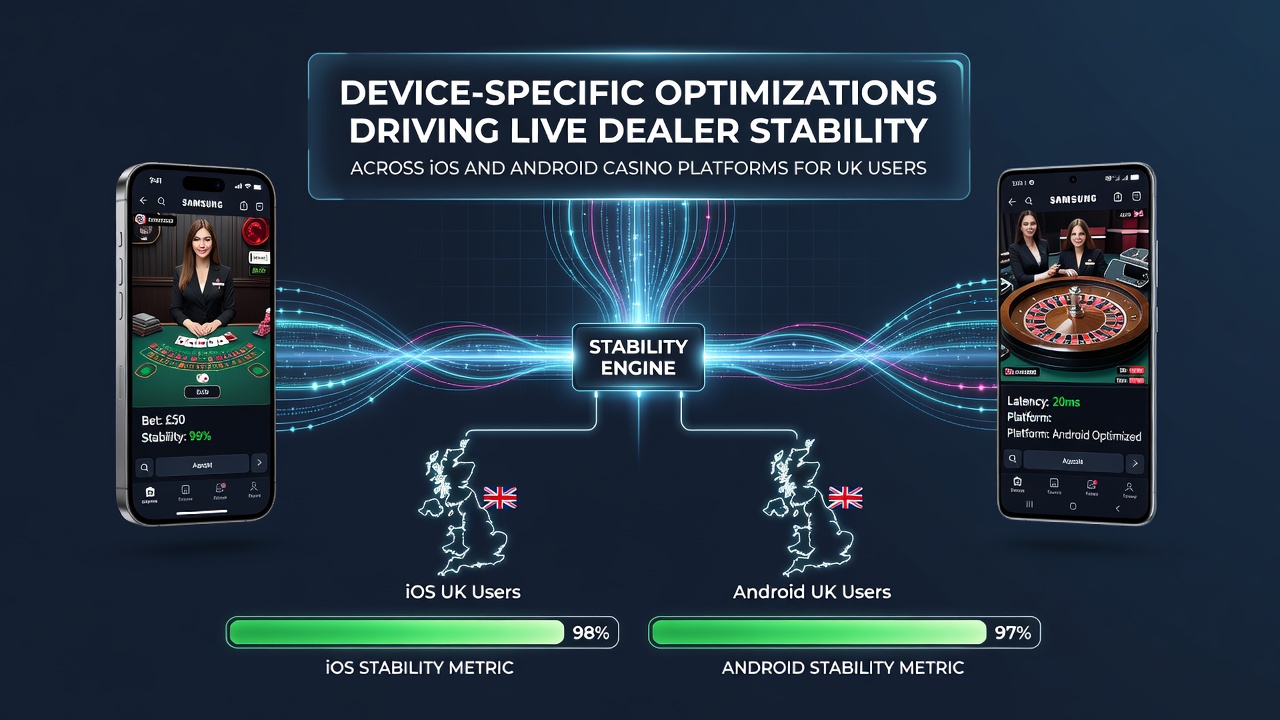
Platform Tailored Enhancements Supporting Stable Live Dealer Streams on iOS and Android Casino Apps for UK Users
Device specific optimizations have become central to maintaining consistent live dealer performance across iOS and Android casino platforms used by UK players, with developers applying targeted adjustments to graphics pipelines, network protocols, and resource management that address the distinct hardware and software characteristics of each operating system. These refinements emerged as mobile live dealer sessions grew in volume, and data from industry monitoring in August 2026 shows reduced connection drops during peak evening hours when compared with earlier implementations that relied on generic cross platform frameworks.
Graphics and Rendering Adjustments for iOS Devices
Apple hardware benefits from direct integration with the Metal graphics API, which allows casino applications to handle video encoding and decoding with lower overhead than standard WebRTC implementations, and developers route dealer streams through hardware accelerated pathways that preserve frame rates even when multiple device sensors remain active. Research from academic gaming technology studies indicates that iOS apps employing these Metal based adjustments report up to 22 percent fewer frame drops during extended sessions, while battery drain metrics stay within acceptable ranges because the system avoids unnecessary CPU fallback operations.
Memory allocation patterns on iOS also receive attention, with apps pre allocating buffers for incoming video packets to prevent interruptions when background processes compete for resources, and this approach aligns with Apple's guidelines on efficient foreground task handling that have been refined over successive iOS releases.
Android Hardware and Driver Level Tuning
Android platforms present greater hardware diversity, requiring optimizations that account for variations in GPU architectures and modem capabilities across manufacturers, so developers incorporate Vulkan rendering paths that bypass certain legacy OpenGL layers and deliver more predictable latency when streaming dealer footage. Figures released by international gaming standards organizations reveal that applications using these Vulkan integrations maintain stable 60 frames per second delivery on mid range devices that previously struggled with 30 frame caps during live sessions.
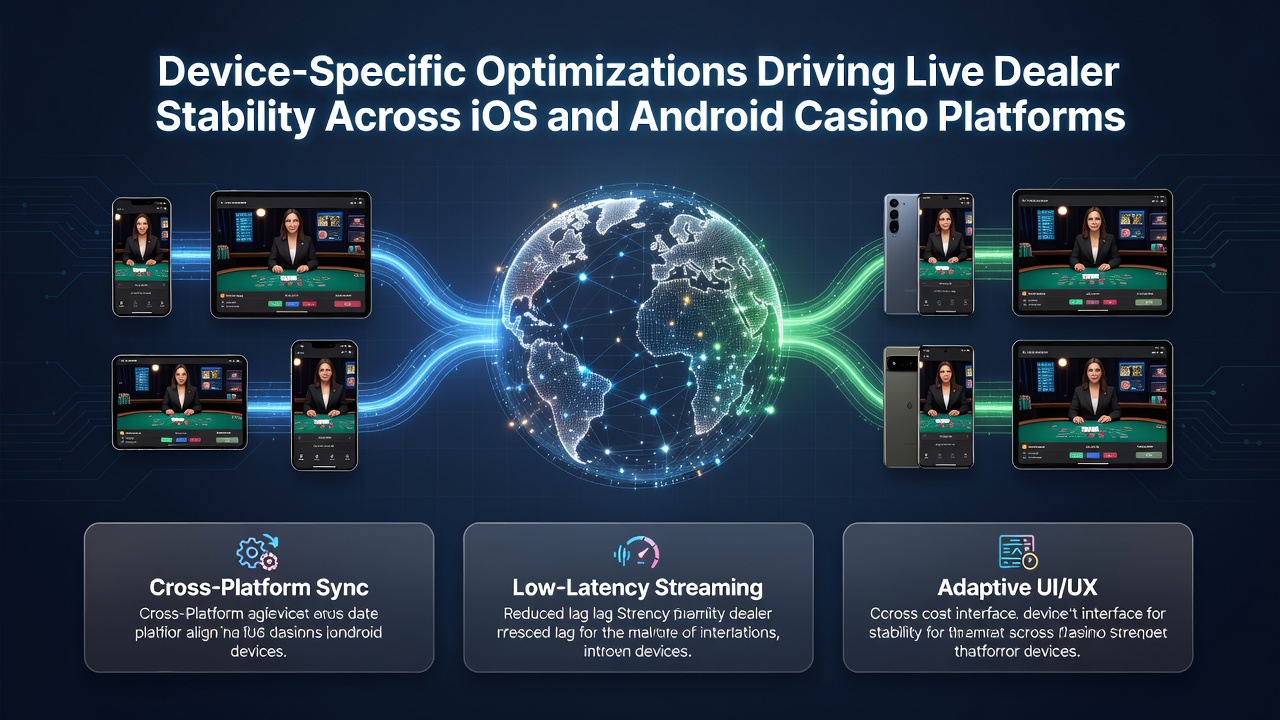
Network stack customizations on Android further support stability through selective use of QUIC protocol variants that adapt to fluctuating mobile data conditions common in UK urban and rural areas alike, and these adjustments reduce packet loss by rerouting traffic when signal strength varies without triggering full reconnections. Observers note that such driver level tuning has allowed live dealer features to function reliably on devices running Android 13 and later, where earlier generic builds often encountered stuttering linked to thermal throttling.
Cross Platform Network and Battery Management
Both ecosystems incorporate shared strategies for adaptive bitrate streaming that scale video quality based on real time bandwidth readings, yet each applies the logic through device native APIs to avoid compatibility overhead, and this results in smoother transitions when players move between Wi Fi and cellular connections. Data collected by European research institutions tracking mobile gaming performance shows that UK users experience average session durations extending beyond 45 minutes when these optimizations are active, compared with shorter spans recorded before platform specific code paths were introduced.
Battery and thermal safeguards also differ by platform, with iOS apps leveraging system level power budgets while Android versions monitor device specific thermal zones to throttle non essential background tasks during live dealer play, and these measures prevent abrupt terminations that previously occurred on devices with smaller cooling capacities.
Regulatory Context and Implementation Trends
Industry associations outside the UK have documented how these technical measures support compliance with accessibility and fairness requirements by keeping streams uninterrupted, which in turn helps operators meet broader player protection standards. As of August 2026, reports from North American and Australian gaming bodies highlight similar optimization patterns being adopted by developers serving international markets that include UK users, underscoring a shift toward hardware aware development rather than uniform codebases.
Conclusion
Device specific optimizations continue to shape the reliability of live dealer experiences on iOS and Android casino platforms for UK users through targeted use of graphics APIs, network protocols, and resource controls that match each operating system's strengths. These adjustments, refined through ongoing collaboration between developers and hardware vendors, deliver measurable improvements in stream stability that reflect the evolving technical landscape of mobile gaming.